



Drone Attack Damages Wildberries Logistics Center, Injures Worker in Tambov Region

26 August 05:08

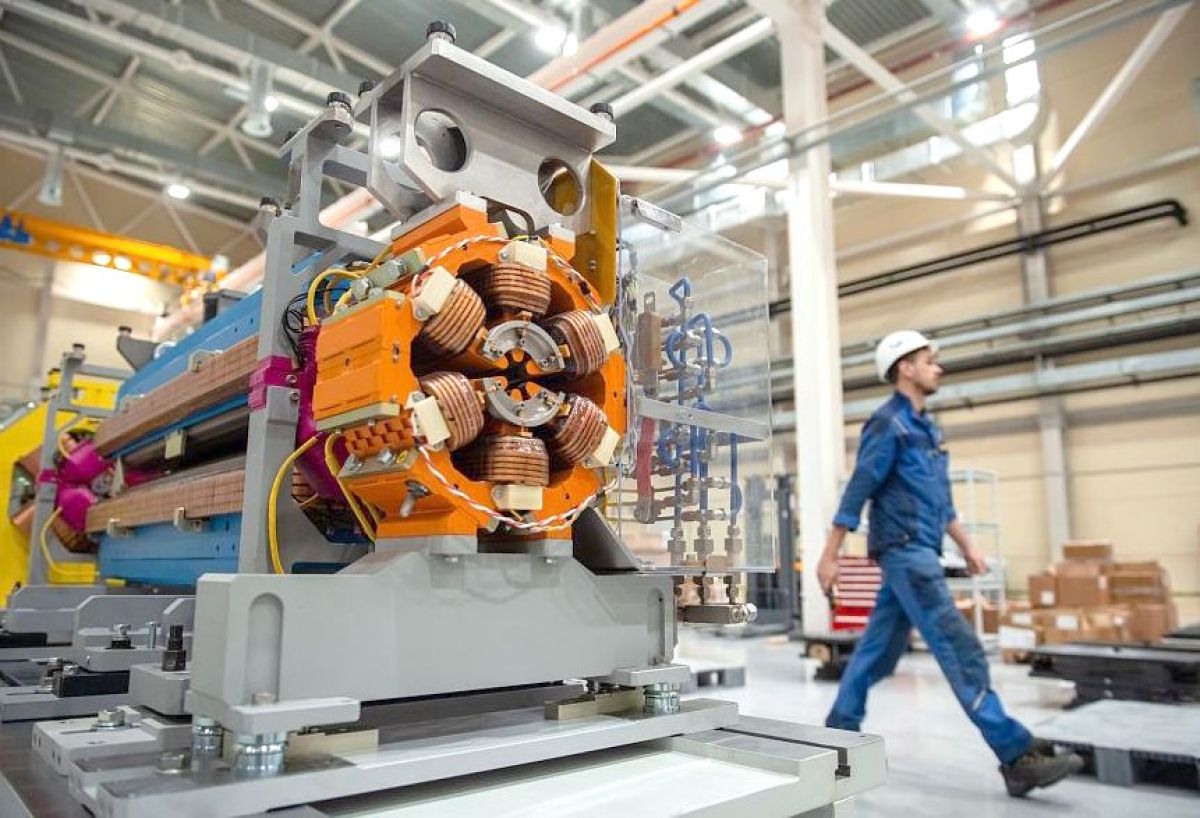
© Минобрнауки РФ
In the science city of Koltsovo, Novosibirsk region, the construction of a unique 4+ generation synchrotron is nearing completion, according to the press service of the Russian Ministry of Education and Science. The future facility will become one of the most powerful sources of synchrotron X-ray radiation in the world and will open up fundamentally new opportunities for research - from fundamental physics and chemistry to biology, geology, and the humanities.
A highly intense X-ray beam will allow scientists to literally "look inside" the complex structures of matter. Among the applied tasks are the study of the mechanisms of viral action and the creation of more effective drugs, the development of new functional materials, as well as solving technological problems for innovative and industrial companies.
The complex is being built on an area of about 30 hectares, with a total construction area of 86,800 square meters. The diameter of the storage ring reaches 240 meters - in terms of its characteristics, the object has no direct analogues in world practice. The entire infrastructure includes 34 buildings and structures, and the overall construction and technological readiness of the project has already exceeded 95%.
The launch of the synchrotron is scheduled for 2026. The Center for Shared Use includes a linear accelerator, a booster synchrotron, the main storage ring, an experimental hall, research stations, and auxiliary engineering facilities.
Recently, engineers successfully transported an electron beam with an energy of 3 GeV from the booster synchrotron to the storage ring through a 220-meter channel. The injection complex - the linear accelerator and booster - is already operating in a round-the-clock mode and has reached design parameters. Power systems are regularly used to work with the electron beam.
The equipment of the storage ring has been completely manufactured and installed in the tunnel. A specialized service area with control electronics and high-frequency power amplifiers has been created for its stable operation. Front-ends - complexes providing the output of synchrotron radiation to experimental stations - have been positioned in the design position. All seven stations of the first stage have already been delivered to the site, and their installation and adjustment are underway.
Today, more than 250 specialists, including about 90 scientists, half of whom have academic degrees, are working at the facility. The project is already forming a powerful scientific and technological cluster around itself, which in the coming years will become a point of attraction for researchers and high-tech businesses from all over the country.
