### Russian Payment Habits Transform Rapidly: Cashless Payments Reach 88.9%
Payment habits in Russia are evolving at a rapid pace. According to the latest report from the Central Bank of Russia for the first quarter of 2026, the share of cashless payments in retail turnover has reached 88.9%, increasing by almost 1 percentage point (p.p.) in just three months. Traditional bank cards are losing ground to new technologies such as QR codes, biometrics, and e-wallets.
### Alternatives Displace Plastic
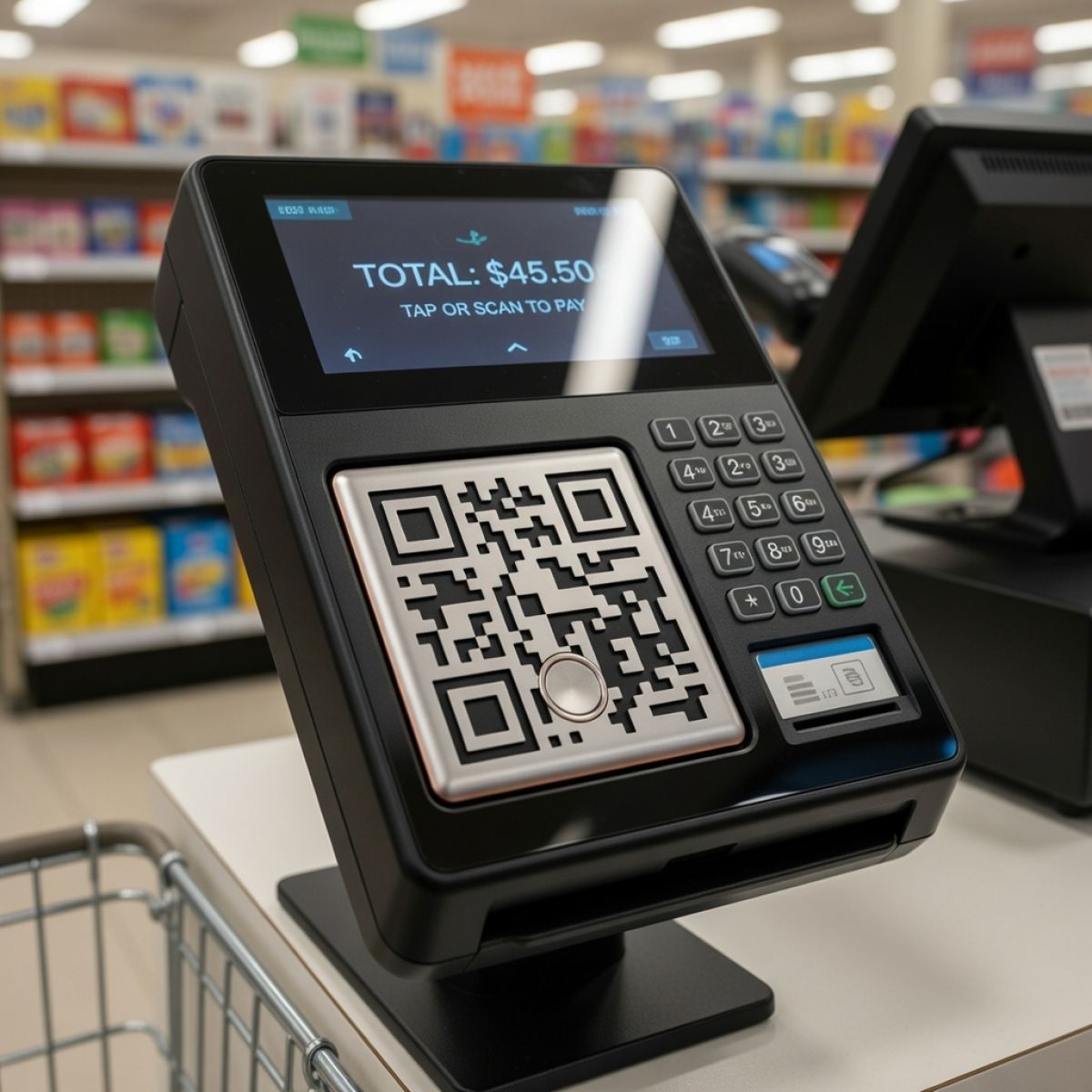
The key trend of the quarter is the acceleration of the transition to alternative payment methods. A year ago, the share of "non-card" payments was modest, but today it accounts for 14.9% of the total volume of cashless transactions (+0.8 p.p. in the quarter). Consumers are increasingly paying for online purchases through e-wallets and scanning QR codes via the Fast Payment System (FPS) or using biometric photo and sensor scanners in physical stores.
In numbers, this looks impressive: citizens made 1 billion such transactions in the quarter—1.7 times more than a year earlier. The total amount of these transactions doubled, exceeding 1.5 trillion rubles.
### FPS Becomes a Giant System
The Fast Payment System has firmly established itself as the dominant infrastructure for transfers. Through FPS, 54% of all person-to-person (P2P) transfers are now conducted—an increase of 6 p.p. compared to a year ago. In the first quarter, 4.7 billion transactions worth 26.5 trillion rubles were processed through the system.
Moreover, not only is the habit of transferring money to friends growing, but more Russians are also paying for purchases through FPS (C2B): 1.4 billion payments worth 2.4 trillion rubles. This method is most commonly used in supermarkets, cafes, and for digital goods. Another new trend is paying taxes and fines (C2G) via QR code through FPS: the number of such transactions has increased several times over the year (to 1.4 million).
### ATMs vs. Wallets
While Russians are embracing new technologies, banks are scaling back their old infrastructure. The number of ATMs decreased by 1.2% in the quarter, down to 130,300 units. Banks are optimizing their networks, focusing on efficiency rather than the number of locations. Fewer devices remain, but each one is used more intensively.
On the other hand, the number of POS terminals increased (+0.7%, to 5.4 million). Two-thirds of them already have an extended functionality—they can accept payments via QR code and biometrics.
### Business Pays Citizens, State Waits for Payments
The shift in trends is also evident in the corporate sector. Although overall business activity was restrained (due to seasonality and tax changes), businesses sharply increased payments to individuals (B2C). The number of such transactions nearly doubled (+almost 100% year-on-year), and the volume increased by 14%. The Central Bank analysts attribute this to the growth in the number of self-employed individuals (delivery, taxi services) and cashback programs.
At the same time, businesses have become more active in paying the state (B2G): the number of payments increased by 20%, although the total amount decreased by 9% due to tax changes.
### Russians Enter "Savings Mode"
In the first quarter of 2026, a savings-oriented behavior pattern became evident. Citizens preferred to save rather than spend. The amount of funds in bank deposits and accounts increased by 14% compared to the previous year. However, the main driver of the growth in the number of transactions among individuals remained payments for goods and services (C2B)—they increased by 5% and accounted for 77% of the total volume.
As for cash: people are withdrawing money less frequently. The number and volume of such operations decreased by 4% compared to the previous year, although their share in the structure (9% by volume) remains stable.
### Russian Payment Landscape Transforms
The Russian payment landscape is changing rapidly. Cards are no longer synonymous with "cashless payment"—mobile apps, biometrics, and FPS are taking center stage. Banks are reducing the number of ATMs but increasing smart terminals. Russians, accustomed to transferring money between their accounts (Me2Me), are increasingly using their phones for this purpose, bypassing ATMs and bank branches.