Putin Ordered to Increase Labor Productivity through Review of Production Efficiency and Work Processes

icon
18:16; 08 December 2025 year
Кремль / скриншот из видео

© Кремль / скриншот из видео

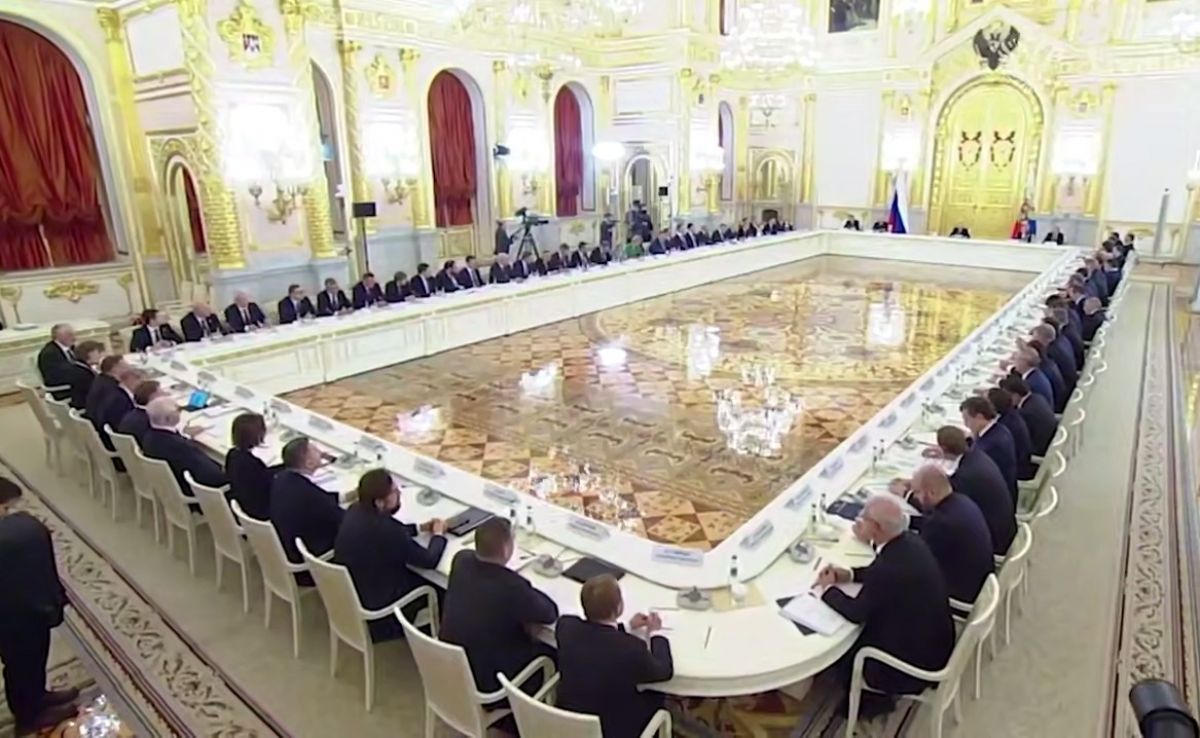
President of Russia Vladimir Putin Addresses Strategic Development and National Projects Council Russian President Vladimir Putin, addressing the Council on Strategic Development and National Projects, highlighted the enhancement of labor productivity as the foundation for strengthening corporate competitiveness, increasing government revenues, and boosting wages. He outlined specific goals by 2030 and instructed the government to intensify efforts in this area, designating it as the fifth systemic task for 2026. By 2030, projects aimed at increasing productivity should cover at least 40% of medium and large enterprises in basic non-resource sectors, as well as state and municipal social service organizations. President Putin emphasized that in the social sector, efficiency gains should not be achieved by increasing the workload on employees but rather by reducing bureaucratic reporting and processes unrelated to education, healthcare, and other core functions. The President noted that despite the participation of thousands of organizations in these projects, the overall dynamics remain modest: the average annual growth rate for 2021-2024 was only 0.7%. He pointed out sectors with negative dynamics during this period: retail (-1.1%), ЖКХ (-0.2%), and transportation and storage (-0.1%). "In general, there are a few negatives, but the average growth rate of labor productivity over the years 2021-2024 was only 0.7%," said Vladimir Putin. The head of state also noted delays in the establishment of industry competence centers under the Ministry of Agriculture, the Ministry of Digital Development, and the Ministry of Defense, instructing them to be launched as soon as possible. President Putin urged the government to more actively involve companies from sectors with high employment and significant growth potential, including retail, construction, certain processing industries, agriculture, transport, and tourism.