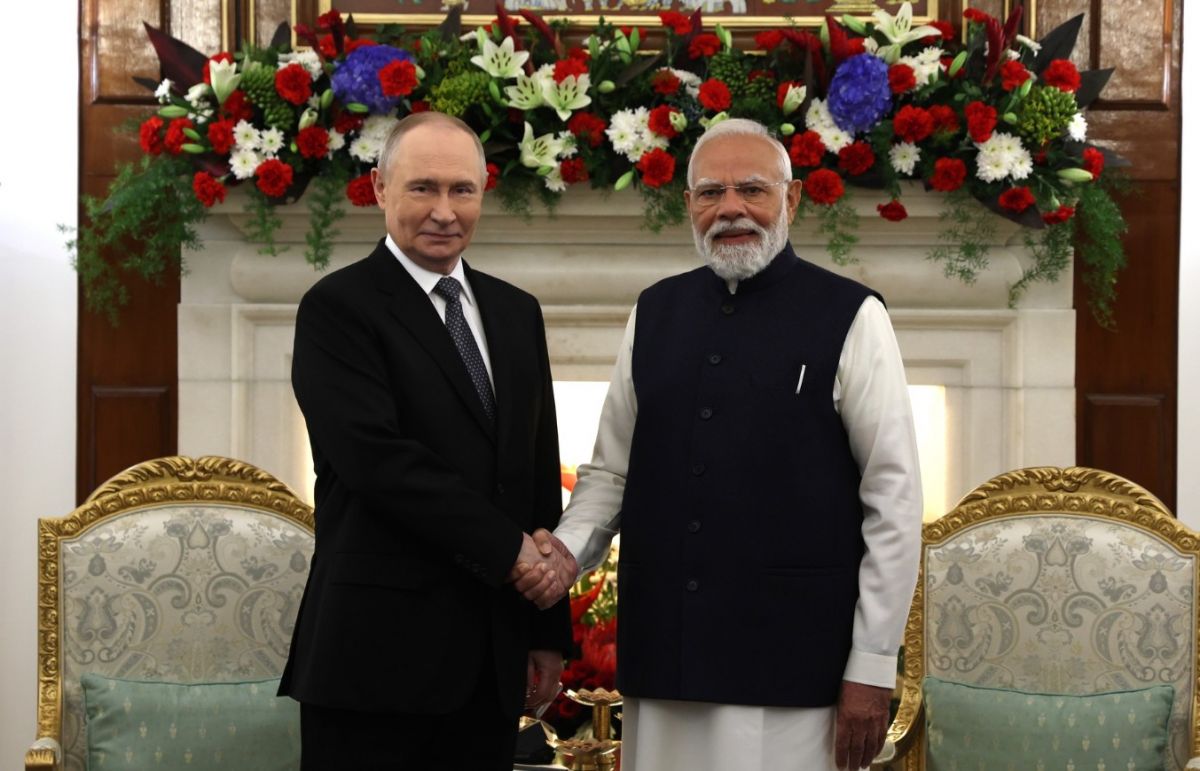
The high-level meeting between Russian President Vladimir Putin and Indian Prime Minister Narendra Modi concluded not only with political statements, but also with a large-scale business program. A package of 29 documents was signed, which expands the cooperation between Russia and India for years to come and covers almost all key areas, from strategic to humanitarian.
The foundation was laid by a set of foundational documents from the joint statement of the leaders of the two countries and the program of strategic directions of Russian-Indian economic cooperation until 2030. Two important agreements were also signed: on combating illegal migration and on temporary labor activities, which create a legal framework for legitimate employment.
Healthcare and Security
Two documents regulate the interaction of ministries of health and supervisory bodies in the area of food safety. This is necessary for increasing trade turnover between the two countries.
Pharmaceuticals and Chemistry
Specific business projects include plans for building a pharmaceutical substances plant in the Kaluga region with Indian investments and memorandums of cooperation between leading chemical companies ("Uralkhim" and Indian enterprises). The agreement was signed between the government of the Kaluga region, LLC "Farmsинтез-Kaluga" and BDR Pharmaceuticals International Private Limited.
A memorandum of understanding was signed between JSC "United Chemical Company "Uralkhim" and Rashtriya Chemicals and Fertilizers Limited, National Fertilizers Limited and Indian Potash Limited.
Logistics, Mail and Arctic Transport Corridors
To develop transport corridors, a protocol was signed on the preparation of specialists for work in polar waters, which opens up new opportunities for India within the framework of the Northern Sea Route.
A protocol was signed between the Federal Customs Service of the Russian Federation and the Central Board of Indirect Taxes and Customs of the Government of India on cooperation in the exchange of advance information on goods and vehicles being transported between the two countries.
Russia and India signed a memorandum of understanding between the Russian Maritime College and the Indian Ministry of Ports, Shipping and Waterways.
An agreement was signed between JSC "Russian Post" and the department of mail of the Ministry of Communications of the Republic of India.
Science and Space
Universities (Moscow State University, Higher School of Economics, Tomsk State University) have agreed to partner with leading Indian universities and research centers, including in the field of space systems and data.
The Higher School of Economics and the Delhi University signed an agreement on cooperation in the storage, processing and transmission of data in space systems.
"Soft Power" and Information Partnership
A separate block of documents indicates work on the establishment of a humanitarian and media bridge. Media holdings "Газпром-Медиа", NMG and RT signed and expanded agreements with the Indian public broadcasting corporation "Pursar Bharti". Cooperation is also strengthened between agencies ITAR-TASS and Press Trust of India.
Cultural ties are reinforced by a contract for the exhibition "India. The Fabric of Time" at the Tsaritsyno Museum-Reserve.
Business Dialogue
To implement economic plans, a solid institutional basis is being created. The Russian Export Center will work with the Indian Investment Attraction Agency "Invest India" and the Federation of Indian Export Organizations.
Leading Russian business associations (RSPP, Business Russia and the Roscongress Foundation) have established interaction with the Associated Chambers of Commerce and Industry of India, the Confederation of Indian Industry, the All-India Industrial Association and the World Trade Centre (Mumbai).
The package of signed documents shows that the Russian-Indian partnership has moved to a qualitatively new level - to specific projects in strategic sectors. The economic program until 2030 receives clear tools for implementation through business cooperation, coordinated migration, labor and security policies. At the same time, close interaction is being established in the fields of science, media and culture, which forms a stable multipolar connection between the two countries for the long term.