### Russian Schools to Introduce Revamped Curriculum from September 1
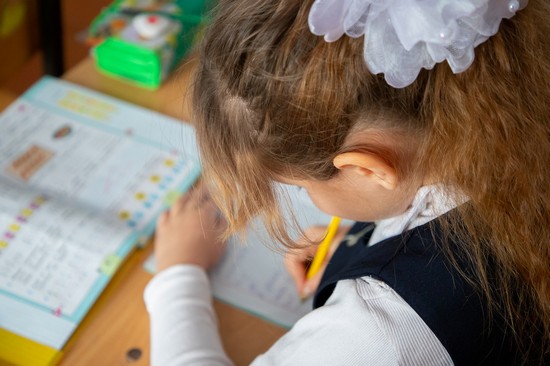
Russian schools will transition to updated educational programs starting September 1, according to Minister of Education Sergey Kravtsov. The changes will affect the content of several subjects, extracurricular activities, career guidance, and approaches to student upbringing. The main goal of the reforms is to create a unified educational space across all regions of the country, Kravtsov said in an interview with Russian news agency RIA Novosti.
Before the start of the academic year, comprehensive work was carried out across all areas of school education. The curriculum has been revised to ensure a comparable level of preparation for students nationwide.
From September 1, 2026, the subject of social studies will be taught in grades 9-11. At the same time, the amount of time allocated to history will increase. A unified program with a set number of hours and sequence of topics will be introduced for history, which schools will not be able to change independently.
Another new subject will be "Spiritual and Moral Culture of Russia," which will be introduced to fifth-graders starting January 2027 and to students in grades 6-7 from September of the same year. The course will focus on introducing students to traditional spiritual and moral values, as well as the biographies and views of prominent state, public, and cultural figures, scientists, and military personnel, including participants in the special military operation (a term used in Russia to refer to the ongoing conflict in Ukraine).
Changes will also affect the course "Fundamentals of Safety and Homeland Protection." From the new academic year, it will be divided into two mandatory sections: "Life Safety" and "Initial Military Training." The focus will be on practical skills, teaching students rules of behavior and protection in everyday life, urban and natural environments, digital space, and the basics of state security.
Additionally, in the 2026/27 academic year, a pilot project to evaluate student behavior in grades 2-8 will continue in selected schools across all regions of Russia. The most effective model recognized so far is a three-level system with characteristics of "exemplary," "acceptable," and "unacceptable" behavior.
The Ministry of Education hopes that this approach will allow evaluations to be used not as punishment but as an additional tool for educational work. If the pilot project is successful, the system could be extended to all Russian schools from September 1, 2027.
Changes will also affect extracurricular activities. From the new academic year, the regional component will become a mandatory part of the course "Russia - My Horizons." This will include at least eight lessons on regional economy, major enterprises, in-demand professions, and career opportunities in a specific region of Russia.
This innovation will be integrated into a unified system of career guidance for students in grades 6-11, which, according to the Ministry of Education, covers more than 8.5 million students.
In total, on September 1, 2026, Russian schools will welcome around 17.5 million children, including about 1.5 million first-graders.