AI: Path to Future, Not Barrier - Yastreboff

09 November 13:05

© ООО "Региональные новости"
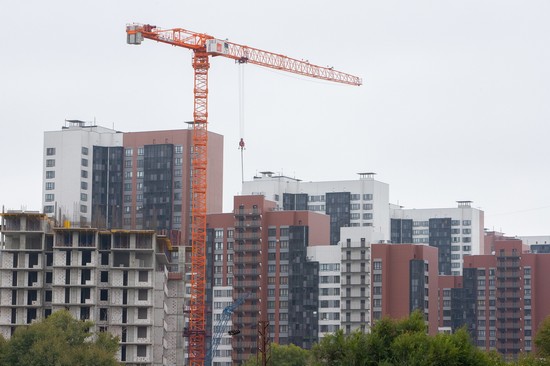
Construction projects in flood-prone areas that were initiated before the ban took effect will be allowed to be completed. On August 4, 2026, a direct ban on the construction of capital construction projects in flood-prone zones came into force in Russia. These new rules were introduced by a federal law that amended several regulations. The new legislation affected tens of millions of square meters of ongoing construction projects and raised questions about the implementation of already approved projects. In response to the risks of construction stoppages and an increase in unfinished buildings, the government issued a decree on October 28, 2026, establishing a transitional mechanism until 2030. This mechanism allows the continuation of construction projects initiated before the law came into effect, subject to certain conditions.
How the Transitional Mechanism Will Work
Until 2030, the issuance of construction permits and permits for commissioning objects in flood-prone zones, as well as the registration of entries in registers, will be allowed under one condition: the project documentation must contain solutions for engineering protection of territories and objects from the negative impact of water, and have received a positive conclusion.
For private and garden houses, a separate rule applies. Registration in the register upon completion of work will be allowed if a notification of the start of construction was submitted before August 4, 2026, and the authorized body did not send a notification of non-compliance with established parameters or the inadmissibility of placement on the site within the timeframes set by Article 51.1 of the Russian Urban Planning Code.
Business Raises the Issue
The acute phase of the situation began after a speech by representatives of "Delovaya Rossiya" (Business Russia), a business association. Entrepreneurs noted that the ban effectively halted the implementation of already approved projects across the country—housing, social facilities, and other infrastructure. Business leaders appealed to President Vladimir Putin, asking for permission to build capital construction projects provided that the project documentation had passed state expertise and took into account the risks of flooding. For individual houses not requiring expertise, business proposed allowing construction if there were engineering protections or insurance against risks.
President Putin acknowledged the complexity of the problem and agreed that insurance and protective structures could change the situation, but pointed out the weak development of the insurance institution in this area. He tasked Deputy Prime Minister Marat Khusnullin and the relevant ministry to work on the issue—with the condition that insurance mechanisms were actually functioning.
Marat Khusnullin explained that the problem arose due to the lack of a transitional period when introducing new regulations. According to him, the law affected 73 million square meters of area, of which 11 million square meters were planned to be commissioned this year.
Earlier, Deputy Minister of Construction and Housing and Utilities Nikita Stasishin stated at the Eastern Economic Forum that the issue would be resolved.
— We will approach the issue more balancedly, ensuring that housing and non-residential buildings are constructed but safe in terms of possible flooding. This is primarily a question for the regions. But no one will be left hostage: all obligations taken by companies to banks and people will be fulfilled, all objects will be completed, — quoted by TASS.